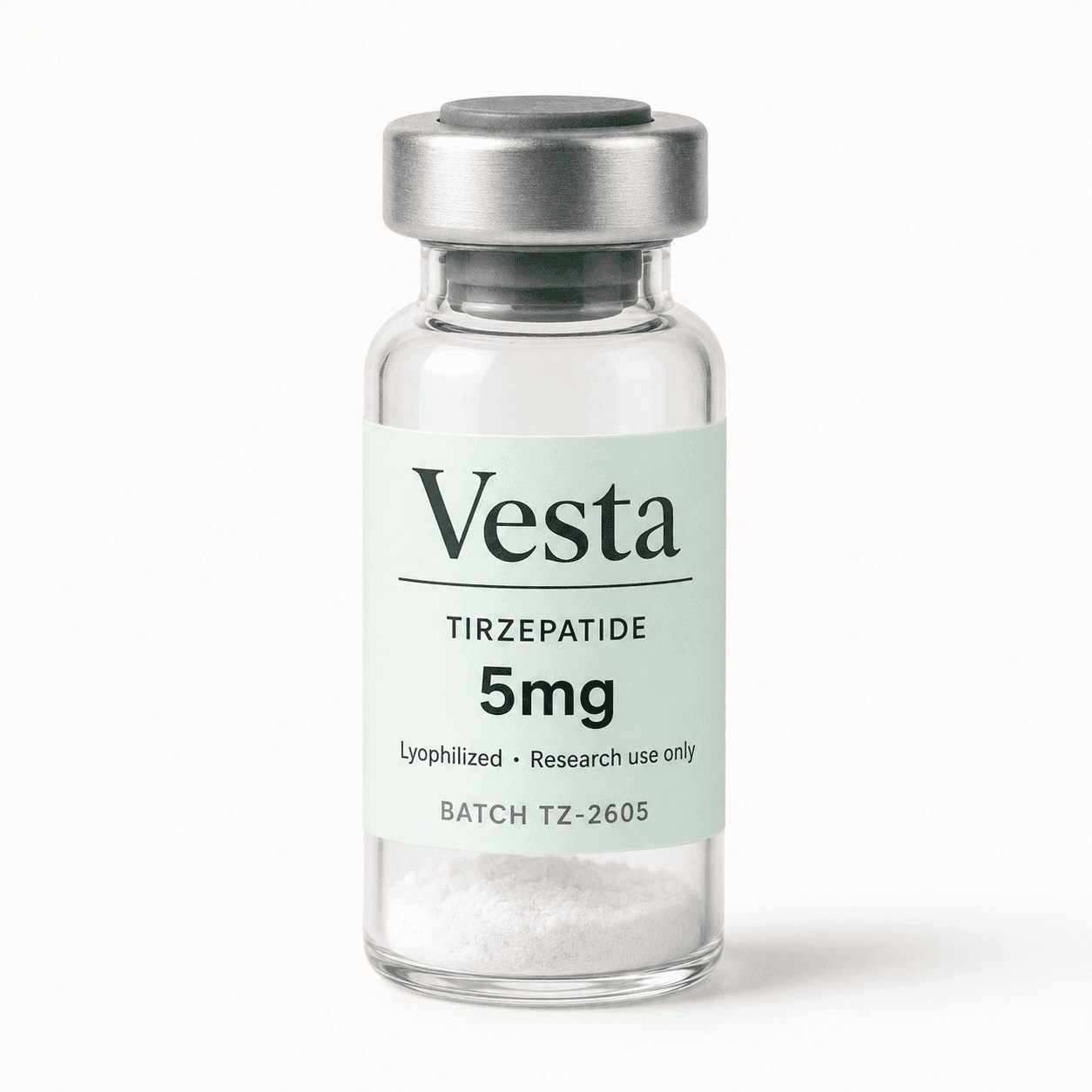
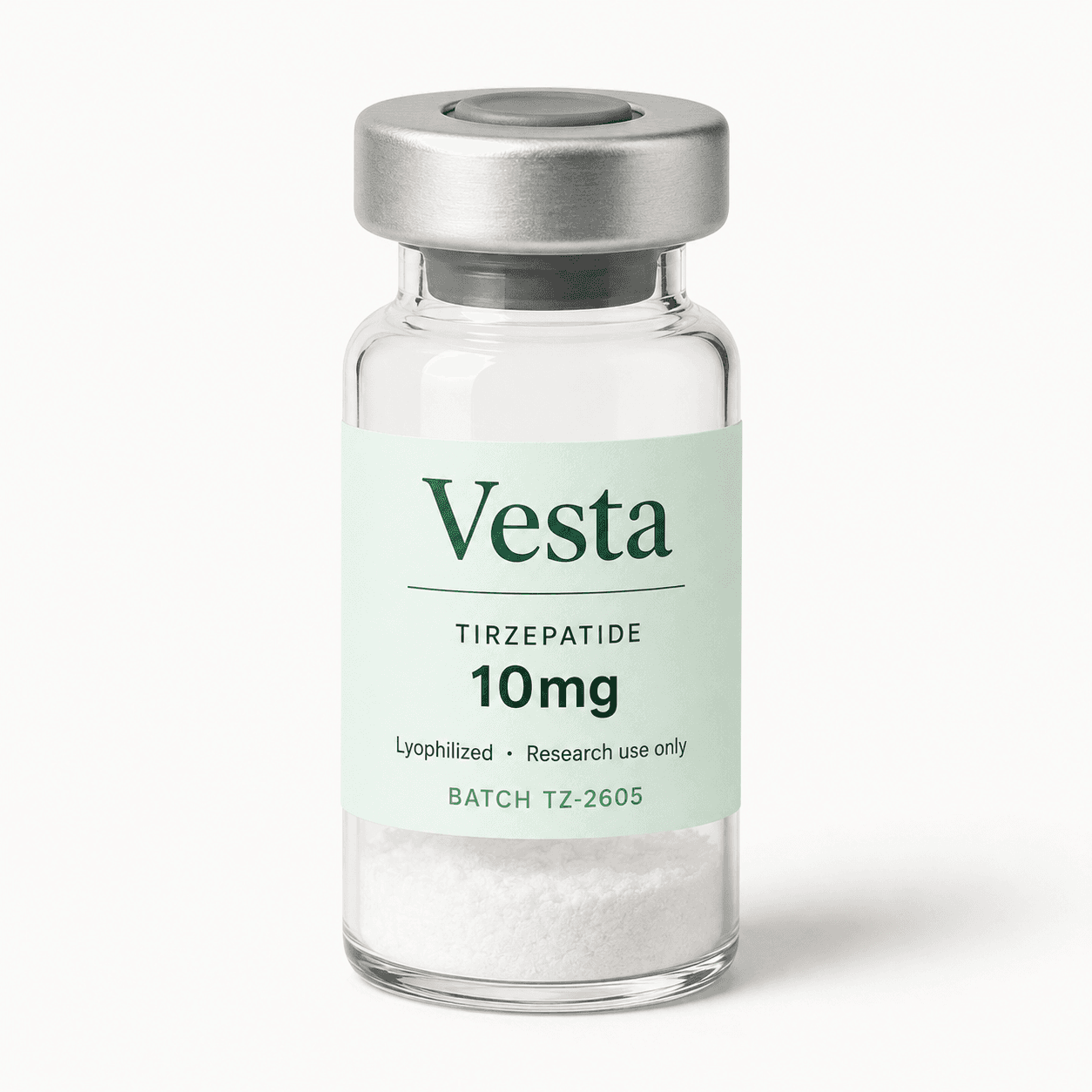
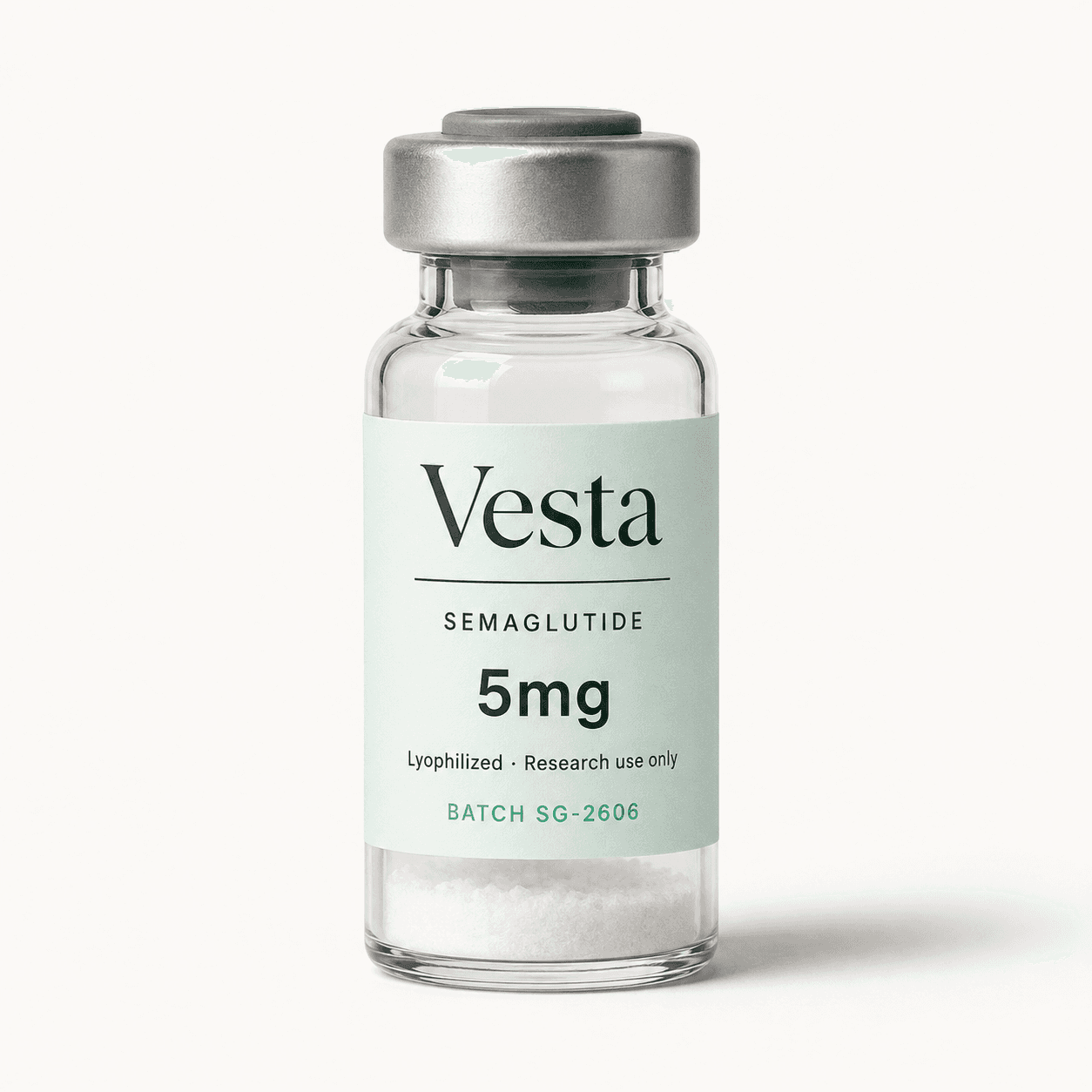
Tirzepatide vs Semaglutide: A Research Comparison of GLP-1 Family Analogs
Receptor profile, pharmacokinetics, and practical considerations for choosing between the two most-studied GLP-1 family peptides.
Semaglutide and tirzepatide are the two most-studied long-acting analogs in the GLP-1 metabolic research family. Researchers planning experiments are often asked which to use, and the honest answer is that the right molecule depends on which receptor pathways the study is meant to probe. This article walks through the structural and pharmacological differences so the choice can be made on evidence rather than convenience.
Receptor profiles
Semaglutide is a selective GLP-1 receptor agonist. It activates the GLP-1 receptor (GLP-1R) with high affinity and shows no meaningful activity at other glucagon-family receptors at physiologically relevant concentrations.
Tirzepatide is a dual agonist that activates both GLP-1R and the glucose-dependent insulinotropic polypeptide receptor (GIPR). GIP is the other primary incretin hormone alongside GLP-1, and the joint receptor activation produces stronger metabolic effects in reported animal and clinical studies than either pathway alone. The dual profile makes tirzepatide the preferred tool when GIP-pathway contributions are part of the study design.
Pharmacokinetics
Both molecules use the fatty-diacid albumin-binding approach to extend plasma half-life. Semaglutide carries a C18 fatty diacid; tirzepatide carries a C20 fatty diacid. The result is comparable elimination half-lives in the 5-7 day range, supporting once-weekly dosing in research protocols.
Where they diverge practically is in receptor occupancy kinetics. Tirzepatide's higher affinity at GIPR than at GLP-1R (the molecule was biased toward the GIP receptor in its rational design) means that low-dose studies sometimes show GIP-pathway dominance — a consideration when interpreting dose-response data.
Reported metabolic effects
In direct comparative studies in animal models and in published clinical trials, tirzepatide consistently produces larger effects on body weight, glucose handling, and lipid markers than semaglutide at clinically relevant doses. The mechanistic interpretation — whether the additional effect comes from GIP receptor activation per se or from the biased pharmacology of this specific dual agonist — remains an active research question.
For researchers comparing single-receptor vs dual-receptor agonism, running both compounds in parallel and matched for GLP-1R occupancy (which requires dose-matching, not mass-matching) gives the cleanest comparison. Vesta's batches are HPLC-verified to allow accurate concentration calculations for matched experimental setups.
Reconstitution and concentration
Tirzepatide is typically reconstituted at higher concentrations than semaglutide in published protocols — 5 to 10 mg/mL is the common range, vs 1 to 3 mg/mL for semaglutide. The higher concentration reflects tirzepatide's larger typical dose per administration and the molecule's good solubility at moderately acidic pH.
Both molecules carry acetate counterions from the synthesis process. Vesta's COA lists the peptide content as a percentage of the total mass; researchers running protocols sensitive to effective peptide dose should adjust for this rather than relying on the gross mass.
Choosing between them
If your research question is about GLP-1 receptor pharmacology in isolation, semaglutide is the cleaner tool. If you are studying combined incretin signaling, energy balance regulation, or want to compare to the current strongest published metabolic effects, tirzepatide is the more representative compound.
For comparative GLP-1 family panels, the third compound increasingly added is retatrutide — a GLP-1 + GIP + glucagon triple agonist. Vesta supplies all three from the same QC pipeline, so cross-compound comparisons can be done without batch-to-batch confounders from different suppliers.