Sermorelin, Tesamorelin, and CJC-1295: Comparing GHRH Analogs
Three GHRH analogs with very different half-lives — choosing among them depends entirely on whether your protocol wants pulses or plateaus.
Growth hormone releasing hormone (GHRH) is a 44-amino acid hypothalamic peptide that stimulates GH release from the anterior pituitary. Native GHRH has a plasma half-life of around 10 minutes — too short for most research dosing schedules — so researchers use synthetic analogs of varying lengths and modifications. Three are routinely stocked: sermorelin, tesamorelin, and CJC-1295.
Sermorelin — the minimal active fragment
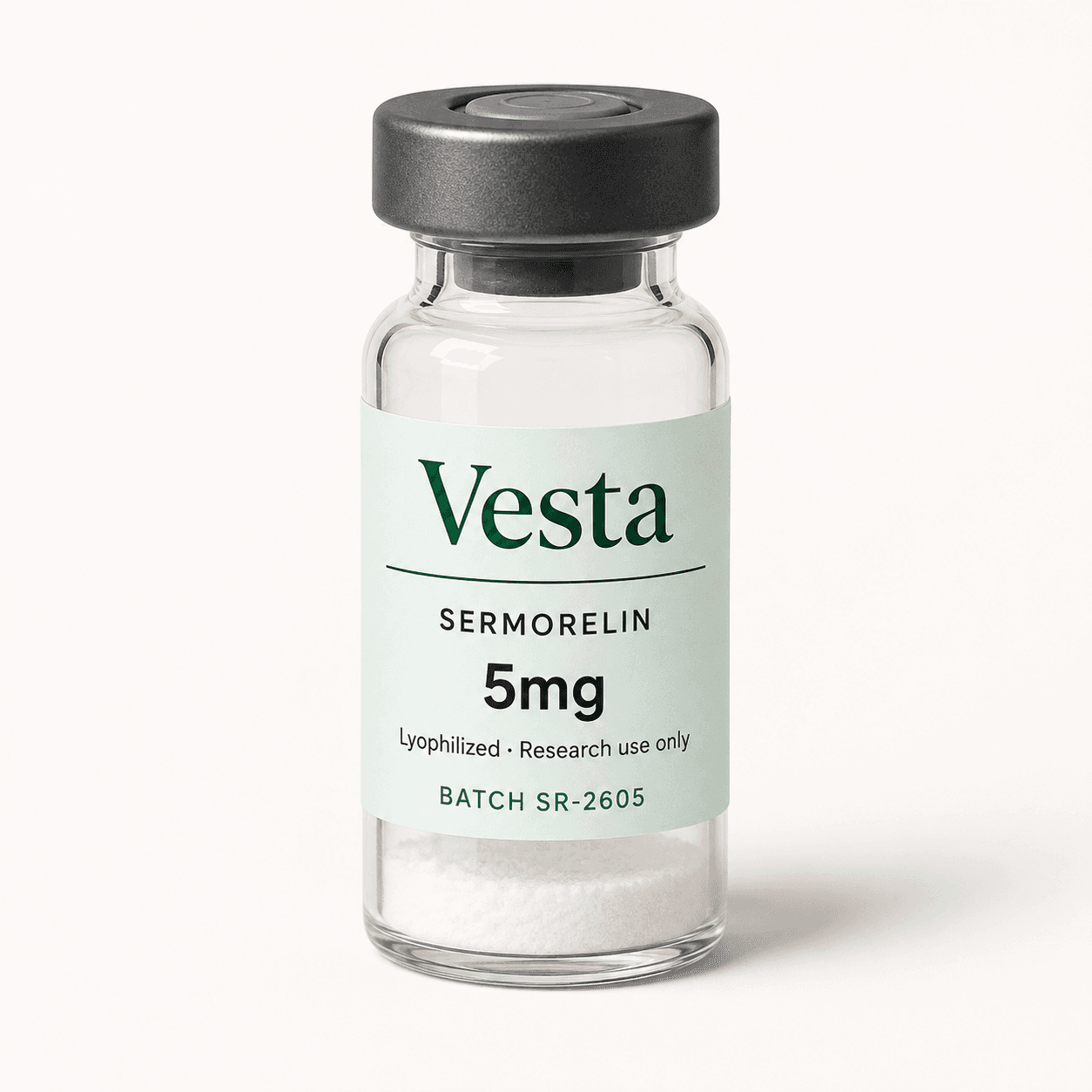
Sermorelin is GHRH(1-29), the shortest amino acid sequence that retains full GHRH-receptor activity. It has the shortest plasma half-life of the three analogs (~10 minutes — essentially matching native GHRH), which makes it the closest mimic of endogenous pulsatile signaling.
Sermorelin is the right tool for protocols designed to study GH pulsatility, receptor desensitization patterns between doses, or short-pulse responsiveness in aged research models. It is rarely the right choice for studies requiring sustained receptor activation.
Tesamorelin — stabilized GHRH(1-44)
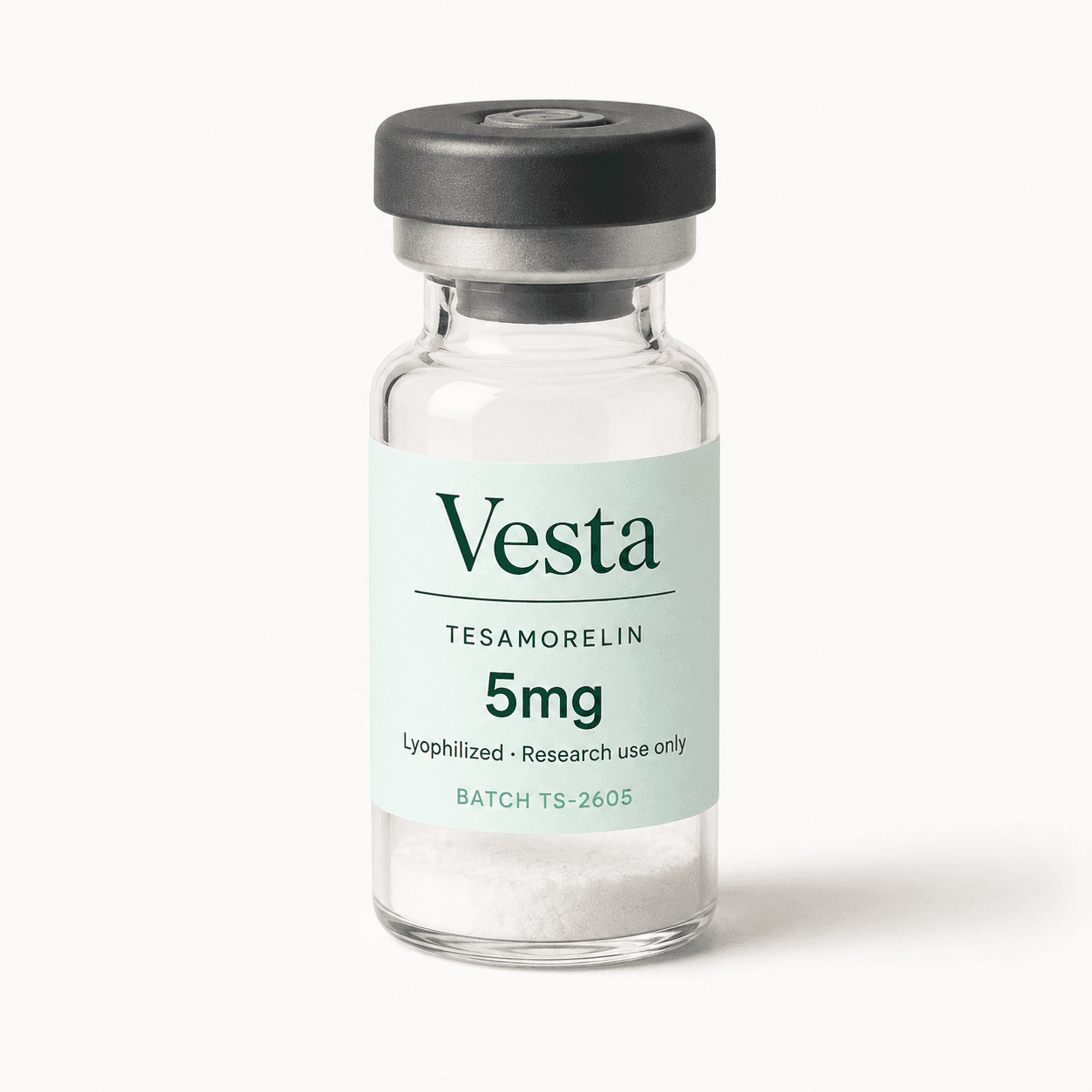
Tesamorelin is the full 44-amino acid GHRH sequence with a trans-3-hexenoyl modification on the N-terminal tyrosine. The modification reduces enzymatic degradation, extending plasma half-life to approximately 25-30 minutes. This gives a pulse profile longer than sermorelin's but still well short of the multi-day window of CJC-1295 DAC.
Research applications focus on visceral adipose tissue and lipid metabolism studies, where the molecule has been characterized more thoroughly than in pure GH-pathway research. Buffer choice matters — tesamorelin solubility is sensitive to pH.
CJC-1295 (DAC and no-DAC)
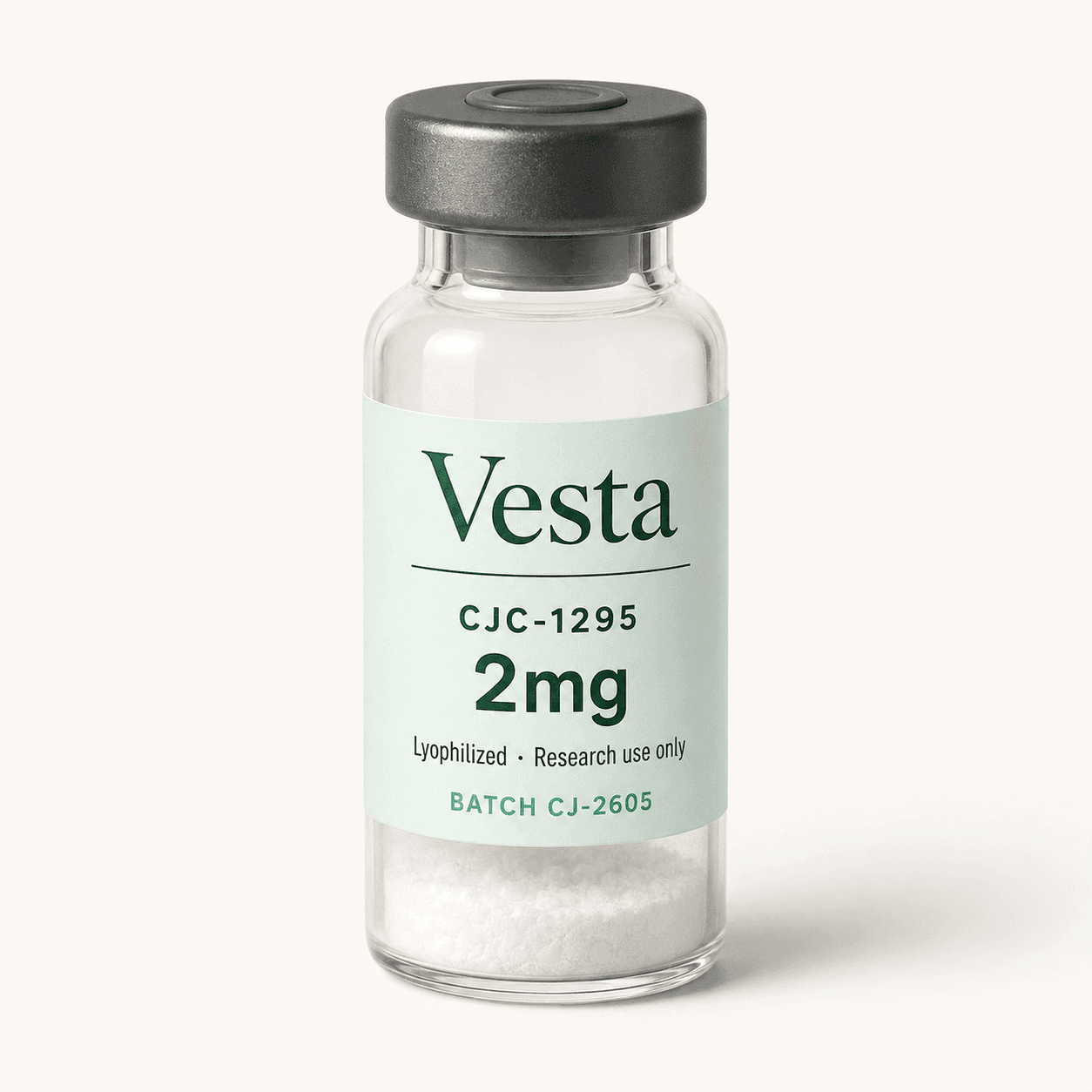
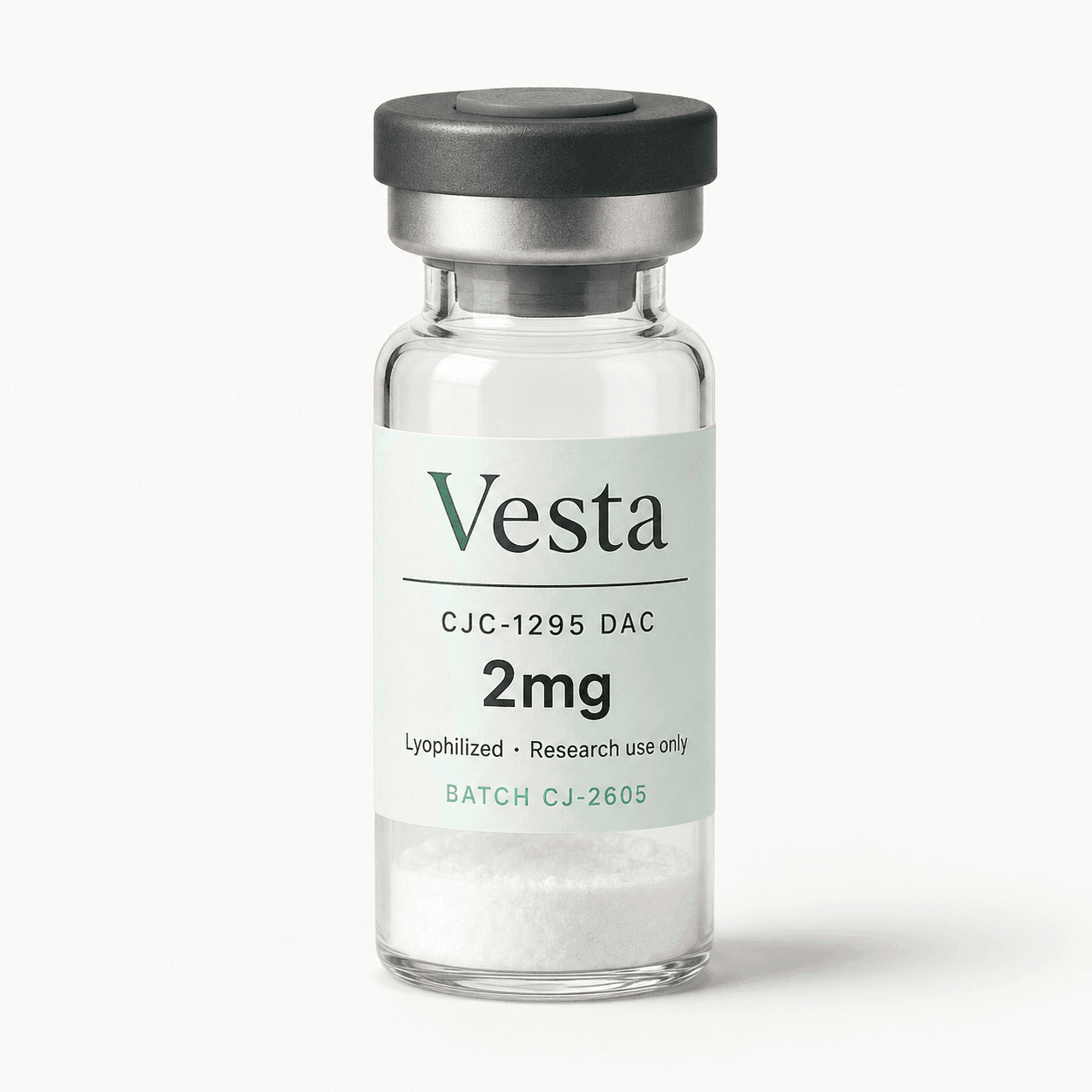
CJC-1295 is a heavily modified GHRH analog: four amino acid substitutions for protease resistance plus an optional Drug Affinity Complex (DAC) linker that binds covalently to serum albumin. The DAC version has an ~8-day half-life — the longest of any GHRH analog in research use. The no-DAC version has a ~30-minute half-life, similar to tesamorelin.
Choice between DAC and no-DAC is determined by the research question. Studies of continuous receptor activation (vs the pulsatile baseline) use the DAC version. Studies designed to enhance natural pulses or to study desensitization use the no-DAC version.
Half-life pairing with ghrelin mimetics
Combination protocols pair a GHRH analog with a ghrelin mimetic (typically ipamorelin). Half-life matching is the critical design choice — pairing CJC-1295 DAC (8 days) with ipamorelin (2 hours) creates large mismatch windows where only one receptor is being activated. Pairing CJC-1295 no-DAC (30 min) with ipamorelin (2 hours) is closer, but still not perfectly matched.
Sermorelin + ipamorelin pairings are the closest half-life match for pulse-style protocols. Vesta stocks all four GHRH analogs from the same QC pipeline, allowing researchers to swap between them within a study program without batch-to-batch confounders.