The CJC-1295 + Ipamorelin Stack in Growth Hormone Research
Pairing a GHRH analog with a ghrelin mimetic — the standard framework for modern GH-pathway research.
Growth hormone (GH) release from the anterior pituitary is regulated by two parallel pathways: stimulation by growth hormone releasing hormone (GHRH) and stimulation by ghrelin (acting via the growth hormone secretagogue receptor, GHSR-1a). Research into combined activation of these pathways consistently shows greater GH release than activation of either alone, which is the reason most modern GH-pathway research protocols pair a GHRH analog with a ghrelin mimetic.
The most-studied pairing in published research is CJC-1295 with ipamorelin. This article explains why this specific combination became the standard, the difference between CJC-1295 DAC and no-DAC variants, and how pulse-versus-continuous protocol design depends on which CJC-1295 form you choose.
CJC-1295 — the GHRH analog
CJC-1295 is a synthetic modified version of the active GHRH(1-29) fragment. Four amino acid substitutions resist enzymatic degradation, and the molecule comes in two forms differing only in whether they include the Drug Affinity Complex (DAC) — a maleimidoproprionic acid linker that binds covalently to serum albumin via Cys-34.
The DAC version has a plasma half-life of approximately 8 days, supporting continuous receptor activation in research models. The no-DAC version has a half-life of approximately 30 minutes, much closer to native GHRH's short pulse profile. The choice between them is determined by the research question: studies of tonic vs pulsatile GHRH signaling use the DAC version; studies designed to mimic endogenous GH bursts use the no-DAC version.
Ipamorelin — the selective ghrelin mimetic
Ipamorelin is a 5-amino-acid synthetic pentapeptide that acts as a selective agonist at the ghrelin receptor (GHSR-1a). Older ghrelin mimetics (GHRP-2, GHRP-6, hexarelin) produce stronger GH release per dose but also activate cortisol, prolactin, and ACTH pathways in published animal studies. Ipamorelin's selectivity profile minimizes these off-target effects, which is why it is the preferred ghrelin mimetic in modern research protocols where clean GH-pathway activation is the goal.
Plasma half-life is approximately 2 hours, supporting two-to-three times daily dosing in pulse protocols. Ipamorelin is most often combined with the no-DAC version of CJC-1295 for matched pulse protocols, since the half-lives align reasonably across the dosing window.
Why this combination
Research showing additive GH release from GHRH-receptor and GHSR-1a co-activation goes back to the 1990s. The specific CJC-1295 + ipamorelin pairing rose to standard status because the half-lives can be matched (no-DAC variant), the ghrelin mimetic is selective enough to attribute observed effects to GH-pathway activation rather than confounding hormone changes, and both molecules are reasonably well-tolerated in animal models with established safety data.
Alternative combinations exist (GHRH peptide 1-29 + GHRP-2, tesamorelin + ipamorelin, etc.), but the CJC-1295 + ipamorelin combination has the deepest body of comparative literature for benchmarking new research protocols against.
Reconstitution and protocol design
CJC-1295 (either variant) is typically reconstituted at 1-2 mg/mL in sterile or bacteriostatic water. Ipamorelin is typically reconstituted at 2-5 mg/mL. The two are kept in separate vials and administered at the same time-point in pulse protocols (rather than combined into a single syringe), which preserves each molecule's stability profile after reconstitution.
Pulse protocols using the no-DAC variant typically administer two to three times daily, often timed to mimic endogenous GH burst patterns. Continuous protocols using the DAC variant administer once or twice weekly, providing tonic GHRH-receptor activation throughout. Both designs include ipamorelin for the ghrelin-pathway arm.
Vesta's stack and QC
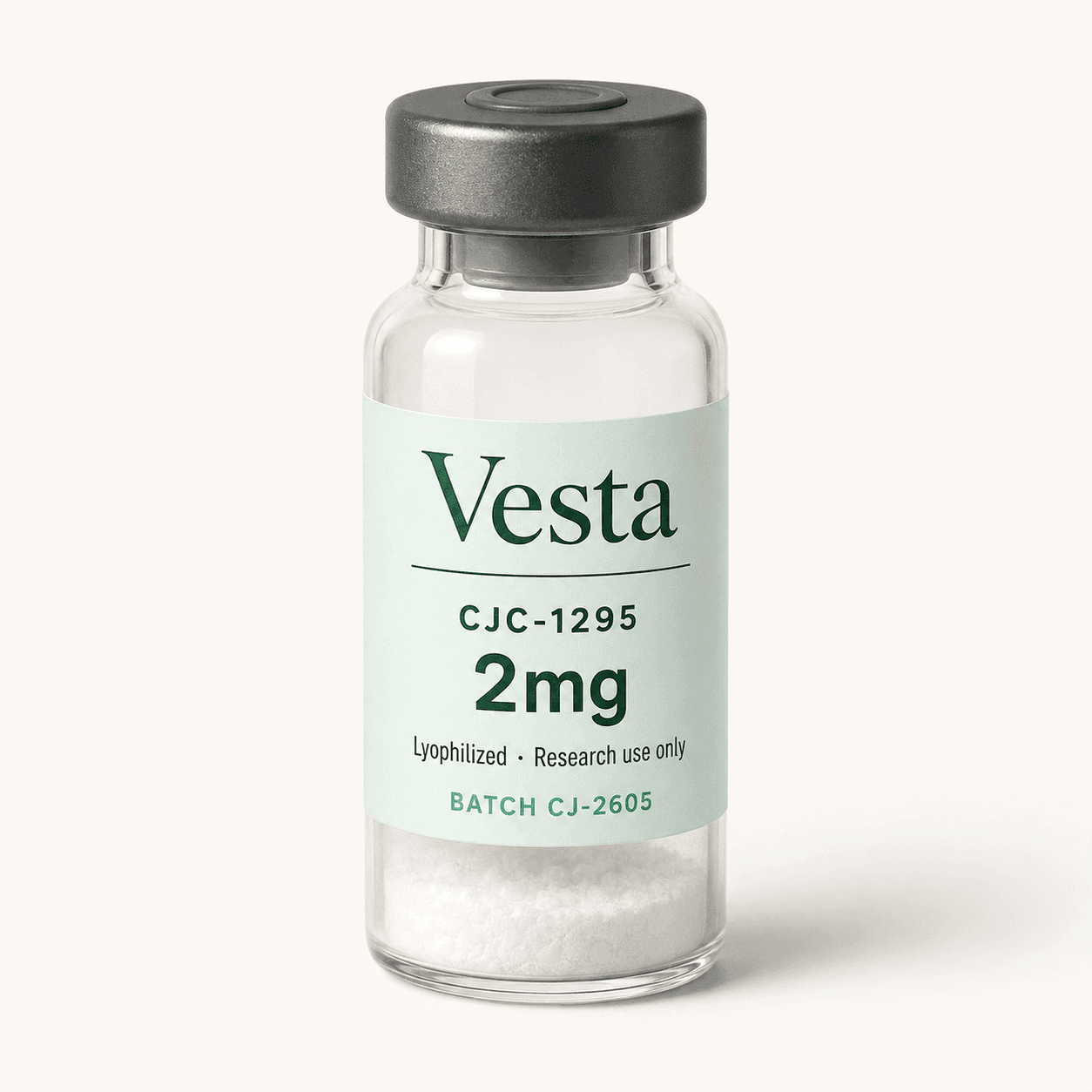
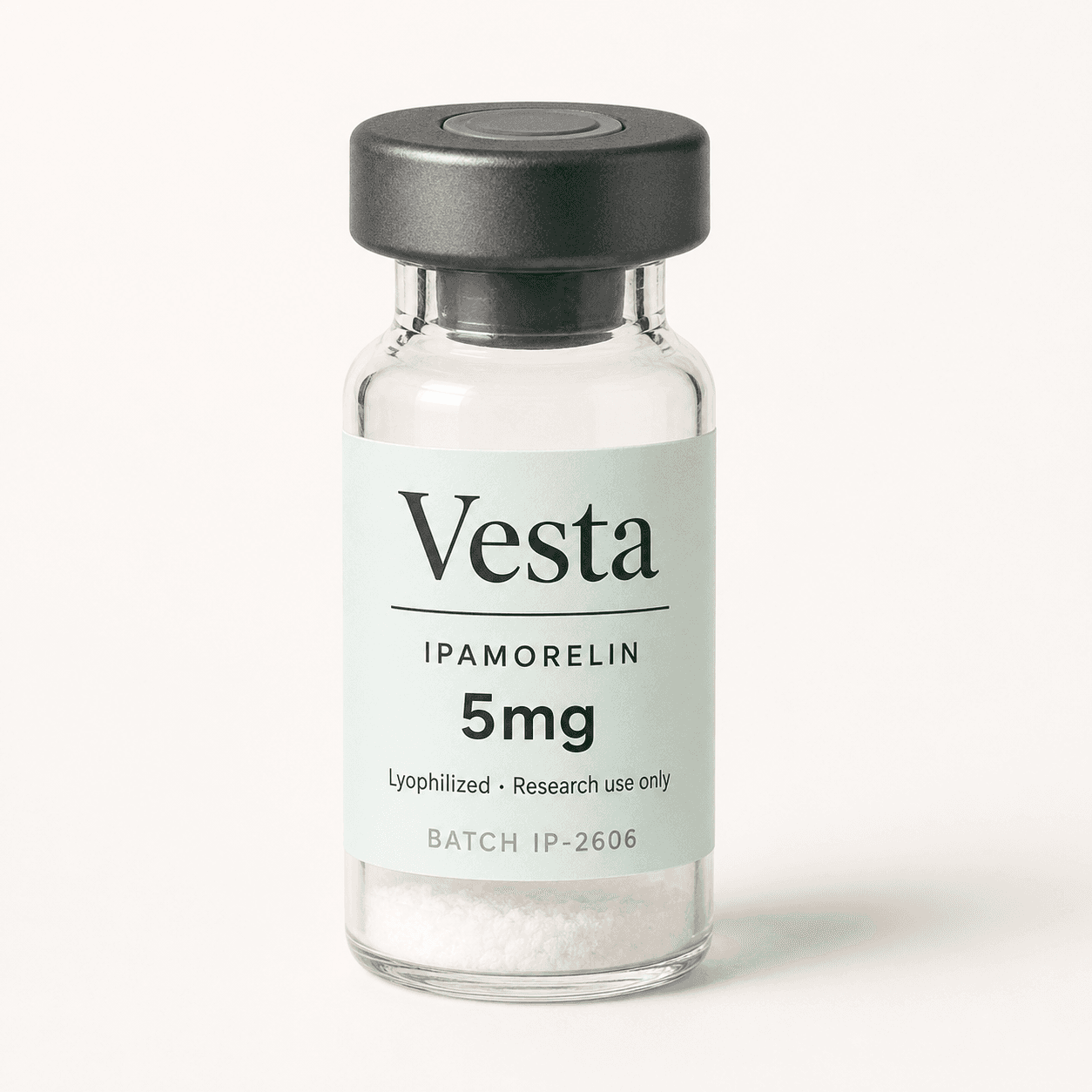
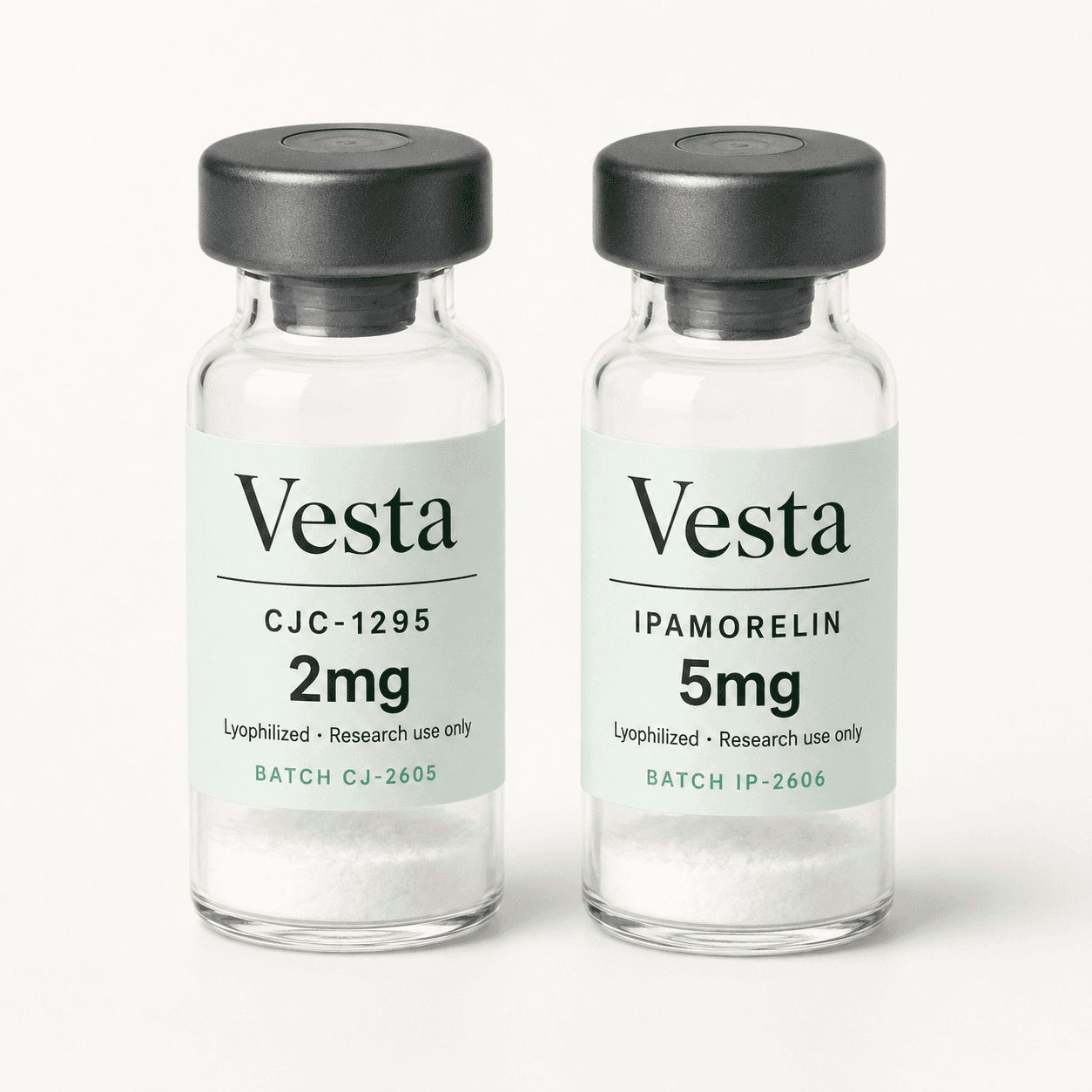
Vesta supplies the CJC-1295 + ipamorelin stack as two separate vials (CJC-1295 no-DAC 2mg + ipamorelin 5mg), each from its own production batch with its own COA. Both are HPLC-verified above 99% purity, mass-confirmed by LC-MS, LAL-screened, and re-tested independently. The bundled price is approximately $24 lower than buying the two SKUs separately. A reconstitution and dosing math card is included.