Cagrilintide and the Amylin Pathway: A Second Lever in Metabolic Research
Why amylin signaling is studied alongside GLP-1, and what the long-acting analog enables in research designs.
Amylin is a 37-amino acid peptide co-secreted with insulin by pancreatic beta cells. It signals through a heteromeric receptor formed when the calcitonin receptor associates with receptor-activity-modifying proteins (RAMP1, 2, or 3). Functionally, amylin slows gastric emptying, suppresses postprandial glucagon, and produces a satiety signal that operates in parallel to — but distinct from — the GLP-1 pathway.
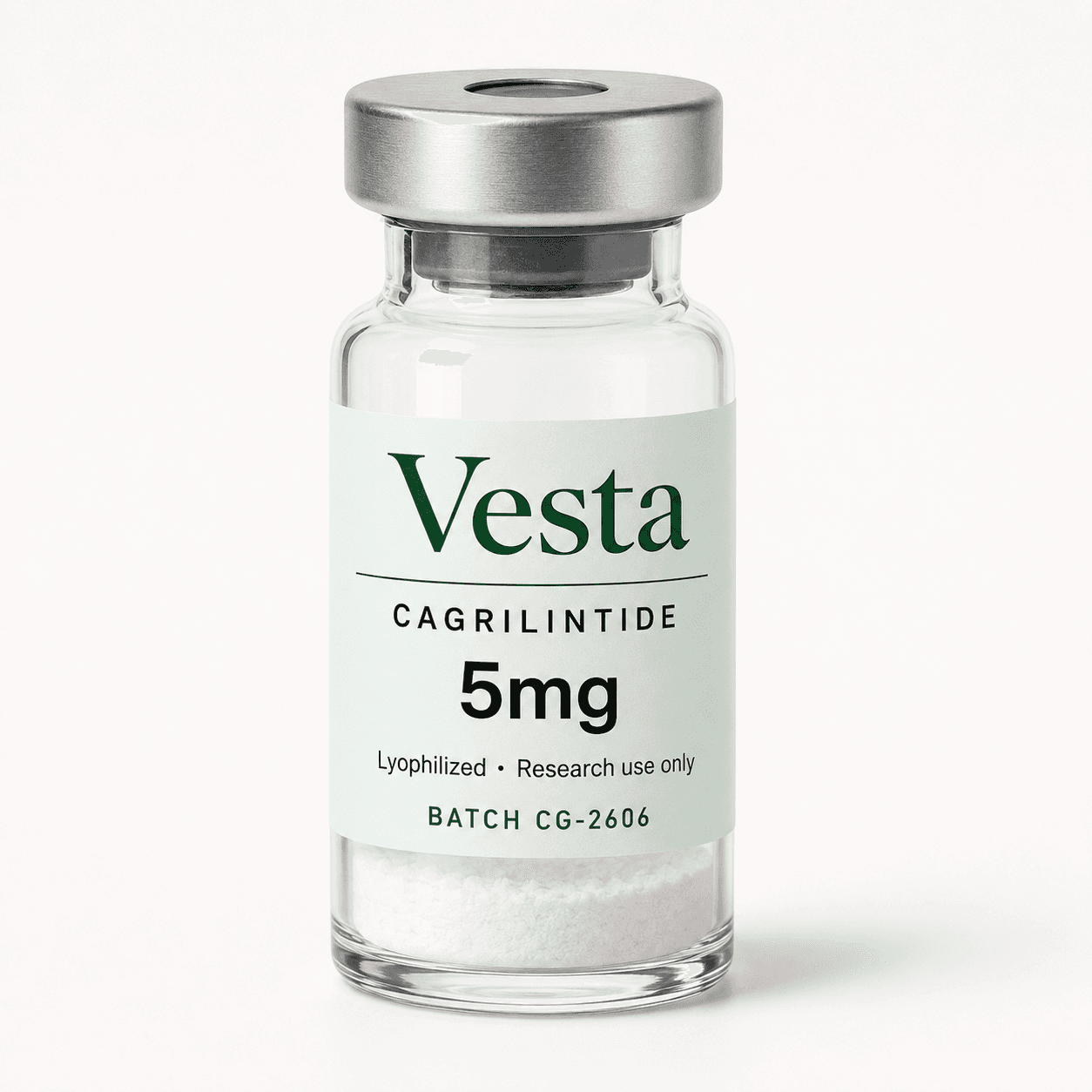
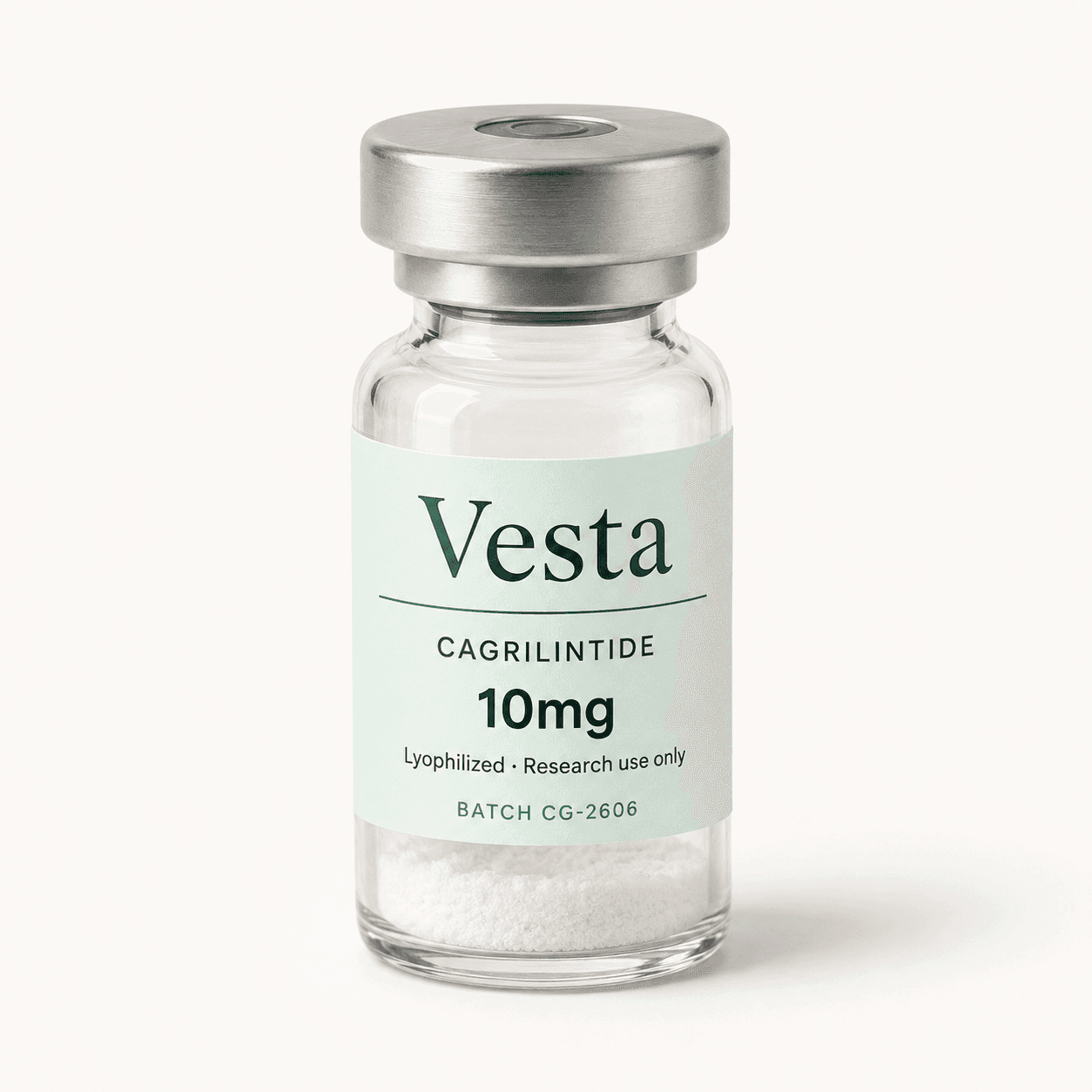
Cagrilintide is a long-acting synthetic amylin analog. It is the principal research tool for studying amylin-pathway contributions to metabolic regulation, particularly in combination with GLP-1 receptor agonists.
Structural design
Native amylin has a short plasma half-life (≈ 13 minutes) due to rapid enzymatic degradation. Cagrilintide stabilizes the backbone with modified amino acids and adds a fatty acid side chain for albumin binding, extending the elimination half-life to approximately 7-8 days in human pharmacokinetic studies. This supports weekly dosing parallel to GLP-1 family analogs like semaglutide.
The molecule preserves activity at amylin receptors and at the related calcitonin receptor, which is important context when interpreting receptor binding data.
Why combine with GLP-1 agonists
Amylin and GLP-1 act through non-overlapping receptor systems but produce overlapping behavioral and metabolic effects (satiety, slowed gastric emptying, glucagon suppression). Published animal and clinical research shows that combined amylin + GLP-1 agonism produces additive effects on food intake and body weight beyond either alone.
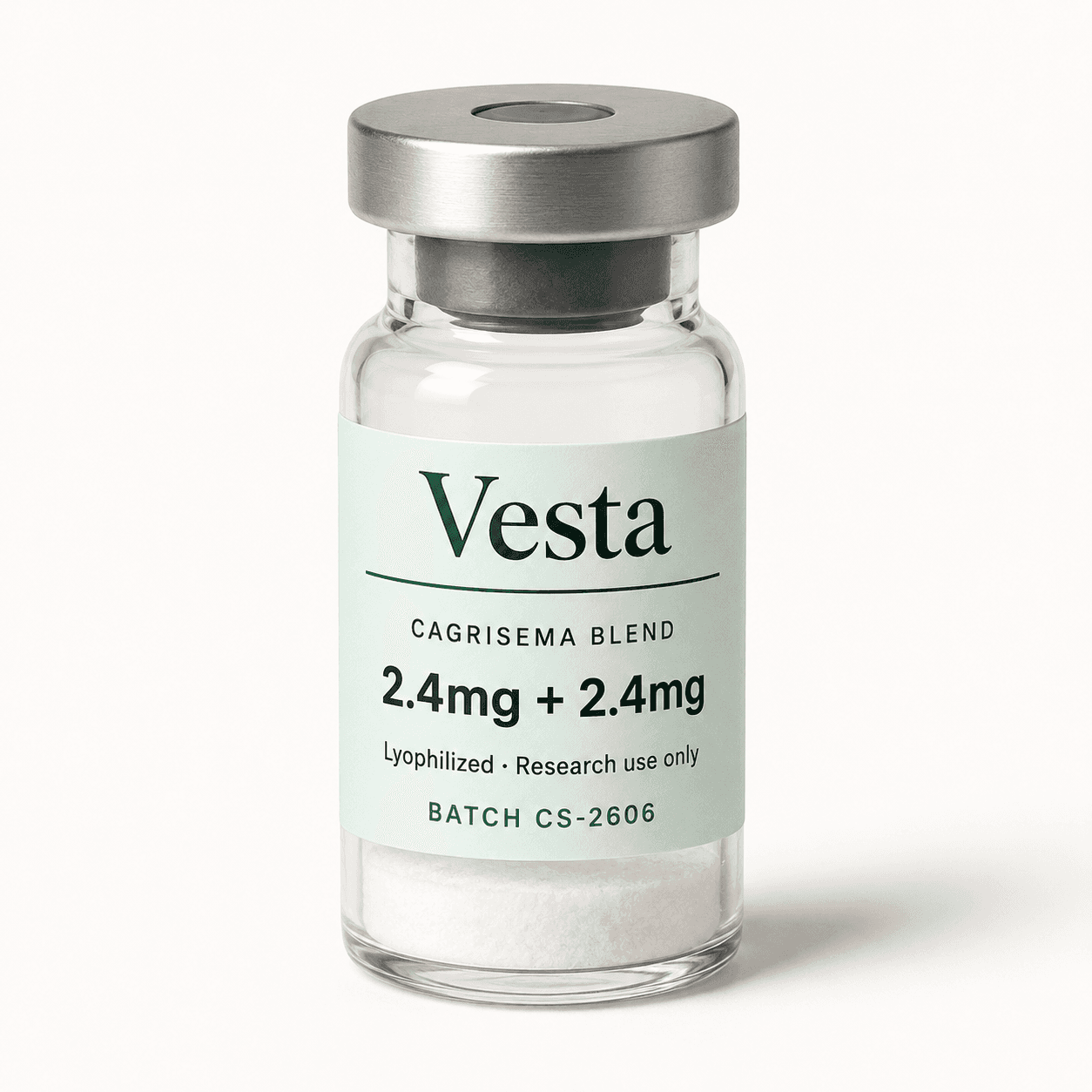
The combination is most studied in the form of CagriSema — a fixed-dose blend of cagrilintide and semaglutide at 2.4 mg each. Vesta supplies CagriSema as a single lyophilized vial alongside the individual molecules, allowing researchers to compare combined vs separate-administration designs.
Common research applications
Cagrilintide is used in research on appetite regulation pathways, gastric emptying kinetics, postprandial glucagon dynamics, and the broader question of which incretin and counter-incretin pathways contribute most to weight regulation. Comparative dose-response work — varying the cagrilintide:semaglutide ratio in combinations — is an active research area.
Reconstitution and handling
Cagrilintide is reconstituted at 2-5 mg/mL in sterile or bacteriostatic water. Refrigerate after reconstitution. The fixed-dose CagriSema blend is reconstituted at 2.4 mg/mL for each component, which is convenient since both molecules end up at the same volumetric concentration.
Vesta's batch COA reports HPLC purity for cagrilintide separately and for both components in the CagriSema blend.